

New Survey Reveals Most Homeowners Are Leaving Valuable Jewelry Underprotected
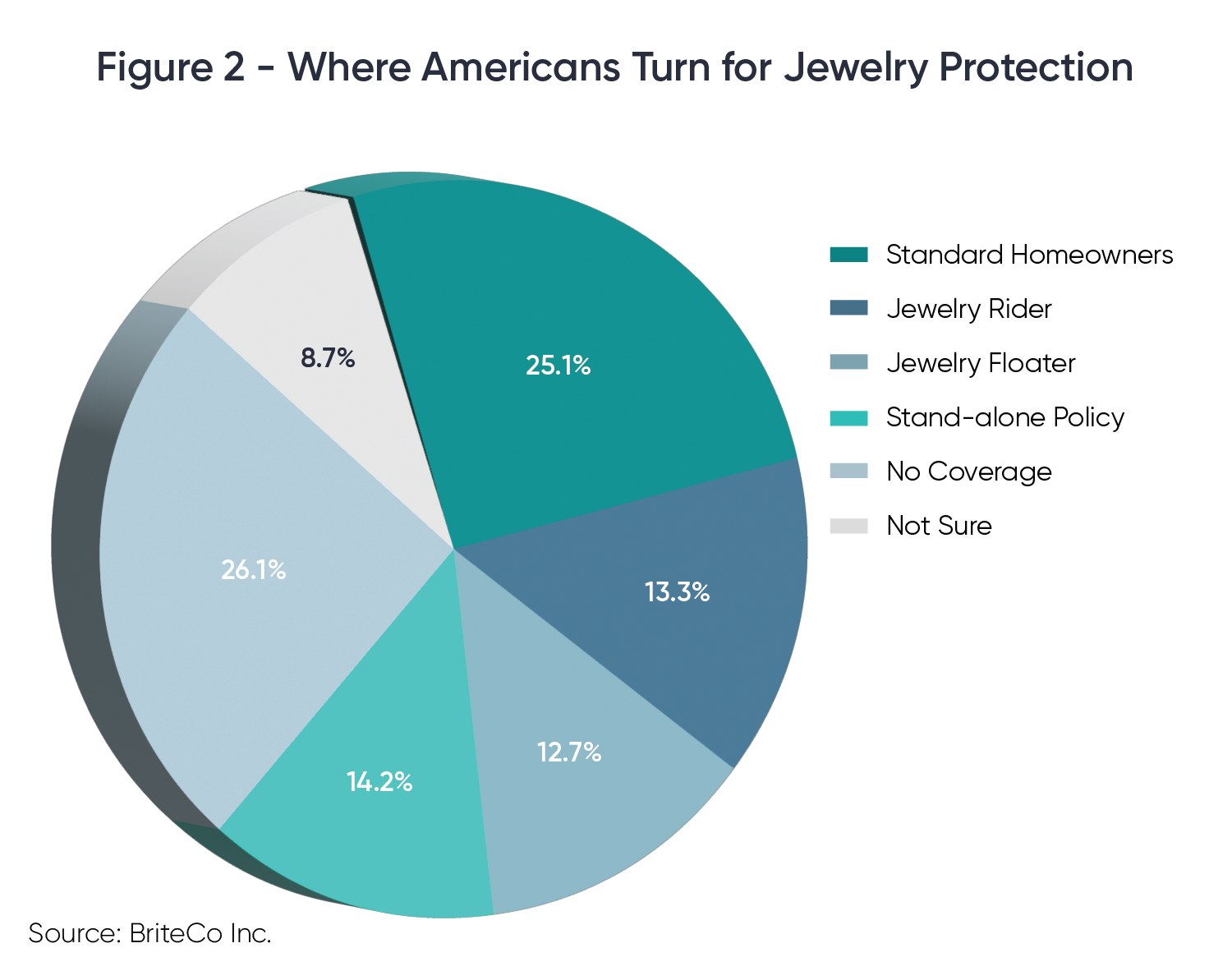
Where Americans Turn to Protect Their Valuable Jewelry
BriteCo Research Shows Widespread Misunderstanding About Jewelry Coverage in Homeowners Insurance Policies
Many homeowners assume their jewelry is fully protected simply because they have homeowners insurance. But in many cases, the actual coverage is far lower than the value of the item.”
EVANSTON, IL, UNITED STATES, March 18, 2026 /EINPresswire.com/ -- A new national survey of U.S. homeowners reveals that millions may be unknowingly exposing their most valuable possessions to financial risk. Conducted for BriteCo, a leading jewelry and watch insurance provider, the BriteCo Consumer Survey 2026 indicates that many homeowners mistakenly believe their homeowners insurance fully protects valuable jewelry — when, in reality, coverage is often limited, and a jewelry claim could impact their home insurance premiums.— BriteCo CEO Dustin Lemick
The survey of more than 1,000 American homeowners found that 70% own jewelry or watches worth more than $1,500, yet only 55% insure those items against loss or theft, leaving a significant number of valuable possessions underprotected.
Many Homeowners Rely on Coverage That May Not Be Enough
More than half of respondents (53%) said they rely on their homeowners insurance policy to cover jewelry. However, standard homeowners policies typically limit coverage for jewelry to between $1,000 and $2,500 per item, often subject to deductibles and restrictions. That gap between expectation and reality can be significant. Nearly one-quarter of homeowners (23%) believe their policy would pay more than it actually does, while 27% say they have no idea what their payout limit is.
“Many homeowners assume their jewelry is fully protected simply because they have homeowners insurance,” said Dustin Lemick, CEO of BriteCo. “But in many cases, the actual coverage is far lower than the value of the item.”
Even homeowners who add a jewelry rider or floater to their homeowners policy may still face unexpected risks. While these endorsements can increase coverage limits for specific items, they are still tied to the primary homeowners policy. Thus, riders and floaters may still include deductibles, coverage caps, or restrictions that leave owners responsible for part of the loss.
Filing a Jewelry Claim Could Affect Your Home Insurance
Another surprising finding: 40% of homeowners do not realize that filing a jewelry claim could increase their homeowners insurance premiums or even lead to policy non-renewal.
When a claim is filed through a homeowners policy or a jewelry rider/floater, it is typically reported to insurance loss-history databases used by insurers to evaluate risk. That record can remain on a homeowner’s file for years and influence future premiums or eligibility for coverage. As a result, filing a jewelry claim through a rider or floater may still lead to higher homeowners premiums or even non-renewal of the policy, depending on the insurer.
Because of these risks, many homeowners say they would avoid filing a claim altogether, with some opting to keep jewelry locked in safes, invest in home security systems, or pay out of pocket for losses rather than risk higher insurance costs by filing a claim.
“Offering stand-alone jewelry insurance, BriteCo is unique in that we do not report jewelry claims to either CLUE or A-Plus, the loss-history databases used by nearly all insurers to assess an individual’s risk and associated premium costs,” according to Lemick. “That means avoiding any impact from a jewelry claim on your other insurance.”
Homeowners Want Better Protection
Despite the confusion, homeowners say they are open to better options. When presented with the concept of stand-alone jewelry insurance costing about 1% of an item’s value annually, 41% said they would definitely choose it and another 39% said they would consider it.
Respondents cited several reasons they would switch to separate jewelry insurance, including:
* Better coverage for loss or theft (49%)
* No risk of homeowners premium increases (41%)
* Lower overall cost (40%)
* Easier claims process (38%)
A Growing Awareness Gap
The research highlights a broader issue facing homeowners today: as insurance premiums rise nationwide, many consumers are looking for ways to save money — sometimes by relying on coverage that may not fully protect their most meaningful possessions.
Experts say the key is understanding exactly what your homeowners policy does and does not cover — particularly when it comes to valuable items like engagement rings, watches, and heirloom jewelry.
About the Survey
The survey of 1,009 U.S. homeowners ages 18 and over was conducted via SurveyMonkey Audience for BriteCo on October 31, 2025. The margin of error is approximately ±3% at a 95% confidence level.
About BriteCo
BriteCo is a leading provider of modern jewelry and event insurance, offering worldwide coverage for loss, theft, and damage. Policies are backed by an AM Best A+ rated insurer and designed to provide full-value coverage with fast online quotes and affordable premiums.
Dustin Lemick
BriteCo
marketing@brite.co
Visit us on social media:
LinkedIn
Instagram
Facebook
YouTube
TikTok
X
Impact of Jewelry Claim on Homeowners Insurance
Legal Disclaimer:
EIN Presswire provides this news content "as is" without warranty of any kind. We do not accept any responsibility or liability for the accuracy, content, images, videos, licenses, completeness, legality, or reliability of the information contained in this article. If you have any complaints or copyright issues related to this article, kindly contact the author above.
